Project-creation lifecycle
This page describes the causality chain started by the creation of a new project. It covers the standard GraphQL and REST project creation input, the creation of the project, and identifies the work performed after the initial project transaction is committed.
1. Initial transaction
The GraphQL createProject mutation is handled by MutationCreateProjectDataFetcher, which first checks the PROJECT:CREATE capability and converts the raw JSON payload into the input.
On the other hand, the REST endpoint constructs the CreateProjectInput directly.
In both cases, the controllers will then call the application service to perform the creation of the project.
The input is both the command data and the root of the causality chain. It provides the following information to the application service:
-
id: the correlation identifier supplied byIInput -
name: the name of the project to create -
templateId: used to select an availableProjectTemplateto configure the newly created project -
libraryIds: used to specify the semantic data dependencies.
The application service ProjectCreationApplicationService opens the initial transaction, resolves the template, and delegates the creation of the project itself to the domain service IProjectCreationService.
The service ProjectCreationService creates and saves the Project aggregate root.
The builder of the aggregate root registers a ProjectCreatedEvent to emit when the transaction is committed, whose causedBy value is the original input.
If the template is missing or the sanitized name is invalid, the application service returns an ErrorPayload; no aggregate is saved and no lifecycle event is emitted.
2. Lifecycle diagram
Every @TransactionalEventListener below uses Spring’s default AFTER_COMMIT.
The listeners that mutate data use REQUIRES_NEW, so each successful listener operation commits before it publishes the next event; no specific ordering is defined between listeners of the same event.
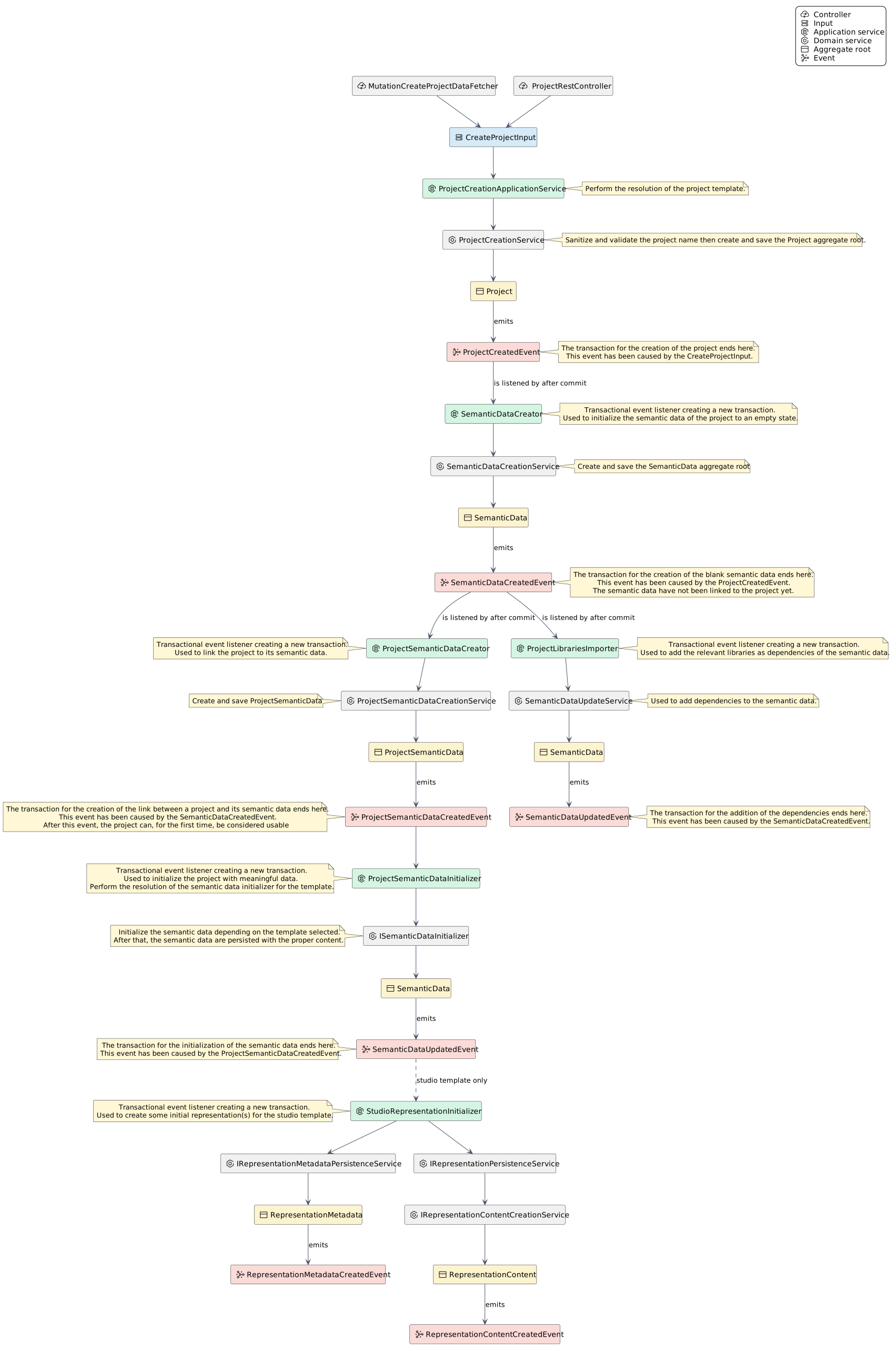
3. Aggregate roots and emitted events
The standard path manipulates these aggregate roots in order:
-
Project:ProjectCreatedEvent. -
SemanticData:SemanticDataCreatedEvent;SemanticDataUpdatedEventwhen an initializer persists documents or imported libraries add at least one new dependency. -
ProjectSemanticData:ProjectSemanticDataCreatedEvent, linking the project to its main semantic data.
For the studio template, the StudioRepresentationInitializer additionally creates RepresentationMetadata and RepresentationContent aggregates through their persistence services, registering RepresentationMetadataCreatedEvent and RepresentationContentCreatedEvent.
4. Transactional listeners in scope
The following @TransactionalEventListener services can receive events from this path:
-
SemanticDataCreatorlistens unconditionally toProjectCreatedEventand starts the semantic-data branch. -
ProjectSemanticDataCreatorlistens to the resultingSemanticDataCreatedEventwhen it was caused byProjectCreatedEvent. -
ProjectSemanticDataInitializerlistens to the resultingProjectSemanticDataCreatedEventwhen its complete cause chain ends inICreateProjectInput; it selects the template-specificISemanticDataInitializer. -
ProjectLibrariesImporterlistens to the sameSemanticDataCreatedEvent; for anICreateProjectInput, it resolveslibraryIdsand updates theSemanticDataaggregate only when there are new dependencies. -
StudioRepresentationInitializerlistens toSemanticDataUpdatedEventcaused byStudioTemplateInitialization; that cause is produced only by the studio template initializer.
Other listeners with compatible event parameter types intentionally do not participate in this application service path because their cause guards require a different initiating input.
For example, ProjectContentImporter requires InitializeProjectInput (project upload), while the fork and studio-library listeners require their own specialized commands.
5. Extension points
Downstream applications can contribute IProjectTemplateProvider implementations to expose templates and ISemanticDataInitializer implementations to populate their newly created semantic data.
The initializer receives the ProjectSemanticDataCreatedEvent as its cause, preserving the full chain back to the original ICreateProjectInput.
It should use the editing context persistence service so that changes flow back through the SemanticData aggregate and emit SemanticDataUpdatedEvent.